
The investigation process of modern times relies on CCTV systems and body-worn cameras and dashcams and mobile devices to deliver essential evidence. The raw footage presents challenges to viewing because it suffers from insufficient lighting and motion blur and compression artifacts and unfavorable camera angles. The video analysis procedure needs structured implementation to provide accurate information extraction while maintaining original files for judicial evaluation. The forensic video service package offers both Forensic Video Analysis services and specialized tools including Tri-Suite 64, Video Active, Video Investigator and AutoMeasure which handle various aspects of restoration, refinement, documentation and measurement.
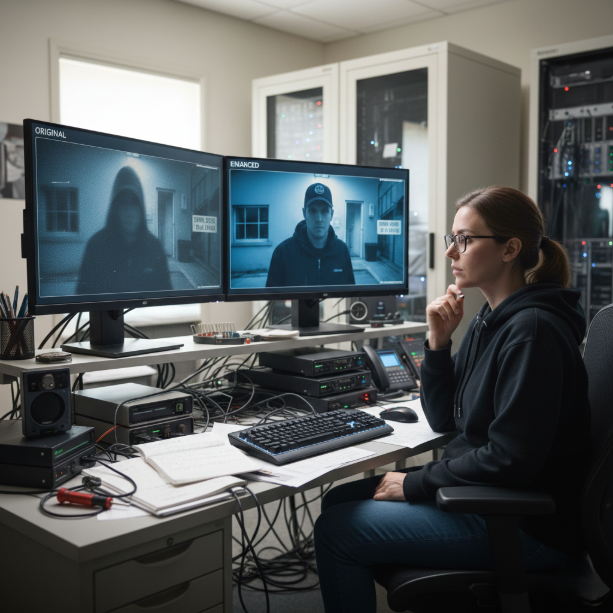
Forensic Video Analysis Services Overview
The process of Forensic Video Analysis begins with the secure acquisition of original recordings and their subsequent verification. The analysts create working copies which they verify before they start environmental enhancement and measurement activities. Tri-Suite 64 performs complete restoration and format conversion to enable users to conduct detailed file analysis. The three applications Video Active and Video Investigator and AutoMeasure provide distinct functions which help users with frame-by-frame refinements and documentation needs and automated measurement tasks. The services provide a systematic method to transform raw footage into finalized documented results.
- Tri-Suite 64 – Restoration and Preparation
Tri-Suite 64 provides a complete workspace which enables users to restore damaged video material and prepare it for assessment. The system enables users to conduct photogrammetric tasks and batch normalization processes while transforming multiple file types into uniform working document formats. Tri-Suite 64 enables professional video enhancer software users to apply validated restoration filters which enhance image clarity without losing important file information or image history. Restoration procedures establish proper standards which prevent excessive processing during later workflow steps while preserving all digital evidence. - Video Active – Frame Refinement and Enhancement
Video Active provides stabilization tools which enable users to deblur and correct exposure while highlighting important details through precise visual clarifications. License plates and timestamps and facial features become visible to users through specialized video enhancer software, which serves as the foundation for all refinements. Operators apply filters conservatively while they log all parameters and preserve both before and after visual representations. Analysts can use Video Active to enhance evidence readability while maintaining original content, which allows them to begin their interpretive analysis. - Video Investigator – Documentation and Audit Trails
Video Investigator connects processed results to case files while it establishes an audit trail which shows everything that happened during the investigation. The system tracks all processing activities while it stores enhanced file connections to original verified files, which demonstrates the chain of custody. The tool captures everything that happens during video enhancer software usage and creates annotated exports which accompany formal reports. Video Investigator creates documentation which enables researchers to review results through replication while presenting their findings in investigations and legal contexts. - AutoMeasure – Measurement and Calibration
AutoMeasure introduces calibrated measurement into visual workflows. Spatial metrics including height and distance and object dimensions can be obtained by analysts from calibrated frames. The quantitative outputs provide crucial support when verifying witness accounts or estimating speed and distance from two specific points. The outputs from AutoMeasure work together with the video analysis findings to create formal metrics which can be included in investigative reports and expert testimony.
Integrating Enhancement and Analysis Workflows
The forensic workflow protects original media by using only verified working copies for all media operations. Users must log all enhancements which they applied through video enhancement software while maintaining links to original source files for all processed artifacts. The enhancement process leads analysts to conduct specific video analysis tasks which involve establishing timelines and tracking subjects across multiple frames and matching visual events with all available digital records. The integration ensures that each analytical conclusion is connected to both the documented processing steps and the original evidence.

Validation, Peer review, and Legal defensibility
The process requires validation and document creation to establish evidence for judicial purposes. Each enhancement needs validation through hash verification, which includes parameter logs and requires peer review. The video analysis report should specify the processed file versions that include metadata showing what procedures were applied to create the report. The use of Tri-Suite 64 and Video Active and Video Investigator and AutoMeasure within validated procedures makes evidence easier to defend in court and to oversight authorities.
Operational Benefits and Best Practices
The automation of restoration and measurement processes enables these services to decrease existing backlog while achieving better throughput results. AutoMeasure, along with Video Active and Tri-Suite 64, delivers rapid results by reducing manual calibration needs and quick triage of essential frames and efficient batch preparation. Best practices require users to protect all original content while they create verified copies, which needs beside documentation of video enhancer software usage, and video analysis output peer review. The analysts need to undergo regular validation and training to maintain their compliance with established forensic industry standards.
Conclusion
The resolution of unclear footage requires forensic processing through structured methods and thorough analytical techniques. The documented approach which begins with Tri-Suite 64 for restoration and proceeds to Video Active and Video Investigator and AutoMeasure lets investigators turn degraded recordings into evidence that stands up in court. The proper use of video enhancer software together with video analysis methods enables investigators to produce visual findings which lead to trustworthy conclusions that hold up in both investigative and legal settings.
FAQs
1. What is forensic video analysis?
Forensic video analysis involves structured video evidence assessment through proven methods which enhance and interpret visual data during documentation and measurement processes while maintaining original video files for court acceptance.
2. How is forensic video different from regular video editing?
Forensic processing follows strict evidentiary protocols. The process requires specific evidence handling procedures which differ from standard video editing because it uses particular enhancement tools while maintaining evidence handling procedures and documentation of every step and it requires the results to be repeatable and usable as court evidence.
3. What does Tri-Suite 64 help investigators accomplish?
Tri-Suite 64 enables users to restore video content while turning it into standard format through its function of video file preparation. The system enables users to transform video content into standard operating video files which can undergo thorough forensic investigation.
4. What role does AutoMeasure play in investigations?
AutoMeasure enables analysts to extract distance and height measurements along with object size information from video frames which have undergone calibration. This calibrated video data provides investigators with measurable evidence which supports their findings and expert testimony.
5. Why is documentation important in forensic video work?
Documentation serves as the foundation which enables forensic video work to establish transparent practices which enable future work to conduct repeat tests which legal entities can use to defend their cases. The credible investigative results which emerge from proper logging of enhancement activities together with analytical processes will stand strong during both investigative work and courtroom testimony.