
Digital forensics requires high accuracy for its video evidence assessment. Surveillance footage is a valuable tool for reconstructing events to identify people and to assess distances and movements in the footage. The raw video data contains multiple errors which make it unusable for analysis. The camera lens system creates visual distortions which lead to different imaging results depending on camera setup.
VideoActive functions as an advanced forensic tool that provides essential support for forensic investigations. The development of VideoActive as a component of forensic software suite enables real-time video processing, which enhances both video precision and user experience. The investigators transform distorted footage into trustworthy court-accepted evidence through the process of lens correction and accurate Camera Calibration.
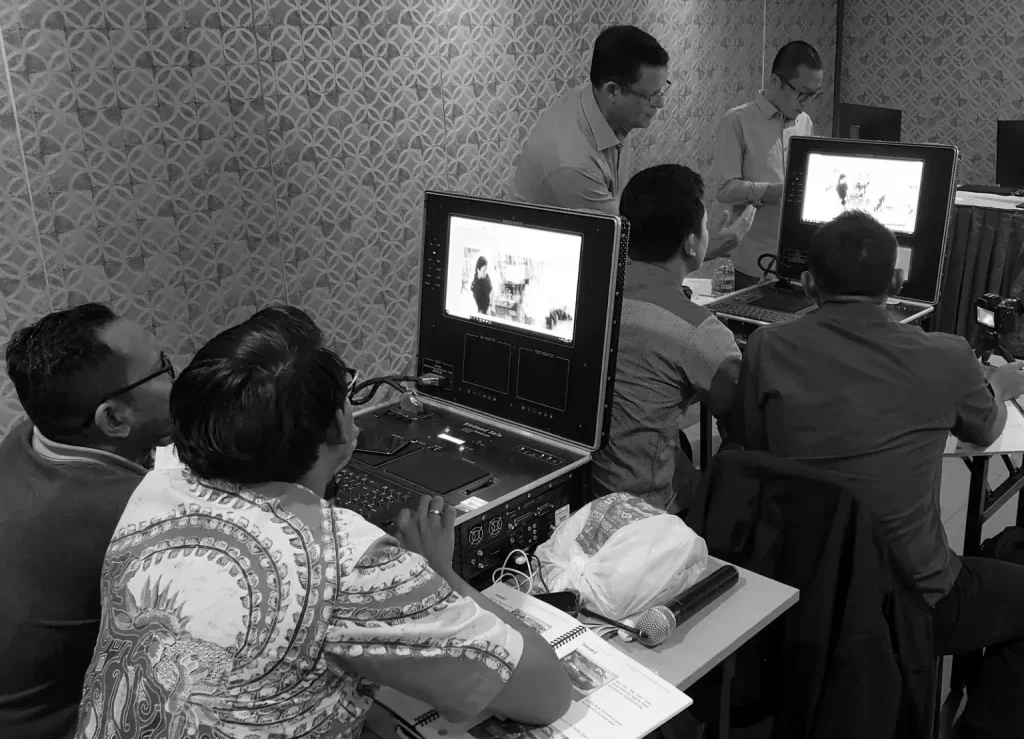
What Is VideoActive and How Does It Work?
VideoActive functions as a forensic video processing tool that allows investigators to efficiently obtain video evidence and conduct its analysis. The law enforcement and military and forensic institutions use the system to manage advanced video processing tasks.
The system enables investigators to obtain and process and examine video content through its capability to handle live and recorded video material. The system provides users with a flexible processing system that allows them to create investigation-specific workflows through its modular design.
The system enables users to achieve precise real-world scene recreation through its lens correction function combined with Camera Calibration system.
Understanding Lens Distortion in Video Evidence
Most cameras, especially wide-angle or surveillance cameras, introduce some level of distortion. The image display shows curves for straight lines while objects stretch and the distance measurement fails to produce accurate results.
Why Distortion Happens
Light enters the sensor through camera lenses which bend the incoming light. The bending process generates geometric distortions that occur predominantly at the frame’s outer edges. Forensic analysis shows that even small measurement errors create significant problems because they lead to false identification of evidence.
The Role of Lens Correction
The process of lens correction uses mathematical methods to remove video frame distortions which show the accurate geometry of the visual scene.
- Straight lines appear straight.
- Object dimensions now reflect their true size.
- All spatial connections between objects stay intact.
The capability of real-time lens correction system enables video processing from the moment of capture which provides analysts with precise footage right from the start.
The Importance of Camera Calibration in Forensics
Lens correction eliminates distortion while Camera Calibration helps systems understand the specific operational characteristics of each camera.
What Is Camera Calibration?
Camera Calibration establishes the internal lens specifications and focal length limits and external camera positioning and angle measurements. The software requires this information to create precise mappings between image data and actual physical dimensions of objects.
Why It Matters
The analysis process requires forensic experts to obtain distance and angle and object size measurements from video content. The video measurements become incorrect through calibration failures which impact measurement outcomes.
Camera Calibration enables investigators to achieve the following functions:
- Investigators can determine the distances between different objects.
- Investigators can calculate the height of people.
- Investigators can establish the angles and locations of objects.
- Investigators can create exact scene recreations.
Calibration transforms video content into measurable information which serves as the essential foundation for developing dependable forensic documentation.
How VideoActive Combines Lens Correction and Calibration
VideoActive combines lens correction with Camera Calibration to create a single workflow system. This unified system enhances video analysis accuracy through its dual components.
Real-Time Lens Correction
The software automatically removes geometric distortion during video capture, which keeps the footage from starting with any distortion issues.
Automated Camera Calibration
The Camera Calibration system provides users with step-by-step guidance through the calibration process, while it delivers ongoing feedback to assist users in achieving proper camera settings for forensic analysis.
Improved Measurement Accuracy
Investigators can make exact measurements from videos after they complete the calibration process and the distortion has been fixed. This method proves beneficial for reconstructing crime scenes and conducting photogrammetry analysis.

Applications in Forensic Investigations
The combination of lens correction technology with Camera Calibration systems provides digital forensic investigators with multiple useful applications.
Crime Scene Reconstruction
Investigators use precise video to recreate events with accurate object locations and movement paths.
Suspect Identification
The corrected and calibrated footage shows facial features and body measurements and other identifying details with exact accuracy.
Distance and Speed Analysis
Investigators use calibrated video to determine both distance and speed, which serves as vital evidence in traffic or accident investigations.
Advantages of Using VideoActive
VideoActive delivers multiple benefits through its combination of advanced processing capabilities and real-time correction functions.
Enhanced Accuracy
The combination of lens correction and Camera Calibration ensures that video evidence reflects the real-world scene without distortion.
Time Efficiency
Real-time processing eliminates the need for extensive post-processing, which allows investigators to complete their work more quickly.
Reliable Evidence
The legal case value of evidence increases through accurate and calibrated footage, which enhances its trustworthiness.
Ready to enhance your video evidence accuracy?
Explore powerful real-time analysis solutions designed for modern investigations.
Learn MoreThe Future of Forensic Video Analysis
The demand for precise video analysis tools will increase because surveillance technology keeps developing for better security monitoring. Modern forensic workflows require real-time processing and automation and precise measurement tools to operate effectively.
Digital forensic systems require lens correction technology and Camera Calibration technology to act as fundamental system components. VideoActive tools will develop into advanced investigative tools that empower users to extract greater video evidence insights through ongoing technological progress.
Conclusion
VideoActive delivers a significant progress update to forensic video analysis capabilities. The software uses real-time lens correction and precise Camera Calibration to produce video evidence that exhibits accuracy and permanent measurement capacity and dependable quality.
The capabilities of these systems enable investigators and forensic specialists to change basic footage into valuable intelligence. Tools like VideoActive will stay vital for producing accurate results because digital evidence now occupies a key position in current investigative work.
FAQ’s
- Why does video distortion create difficulties for forensic investigations?
Video distortion changes how all objects and people and distances in the footage appear. This situation causes investigators to face difficulties because they need to trust video evidence for accurate proof.
- How can investigators ensure accurate measurements from video footage?
Investigators can obtain precise distance and height and movement measurement results by establishing correct camera settings and resolving all visual errors in their video recordings.
- Why do investigations require real-time video processing capabilities?
Real-time processing enables investigators to watch and evaluate footage during both the immediate capture and the subsequent viewing process which helps them to make quick decisions without unnecessary waiting time during important events.
- Can low-quality surveillance footage still be useful in investigations?
Low-quality footage can show valuable information even in its original state because advanced forensic tools enable investigators to improve and study the footage.
- How does proper video analysis improve legal outcomes?
The courtroom process gains stronger credibility through video evidence which has been accurately processed because it provides clear reliable visuals that back up investigative findings while decreasing misinterpretation risks.