
Industrial operations today require high-performance systems which maintain dependable functionality across complicated and highly variable operational settings. The systems need to handle data operations through their complete data collection and processing and data analysis capabilities when they are set up in remote sites or research centers or mobile facilities.
Modern industrial solutions use rugged hardware together with advanced computing capabilities to provide effective solutions for current industrial challenges. The system delivers complete functionality for real-time data management and analysis by combining its digital forensics capability with its scalable data acquisition capacity.
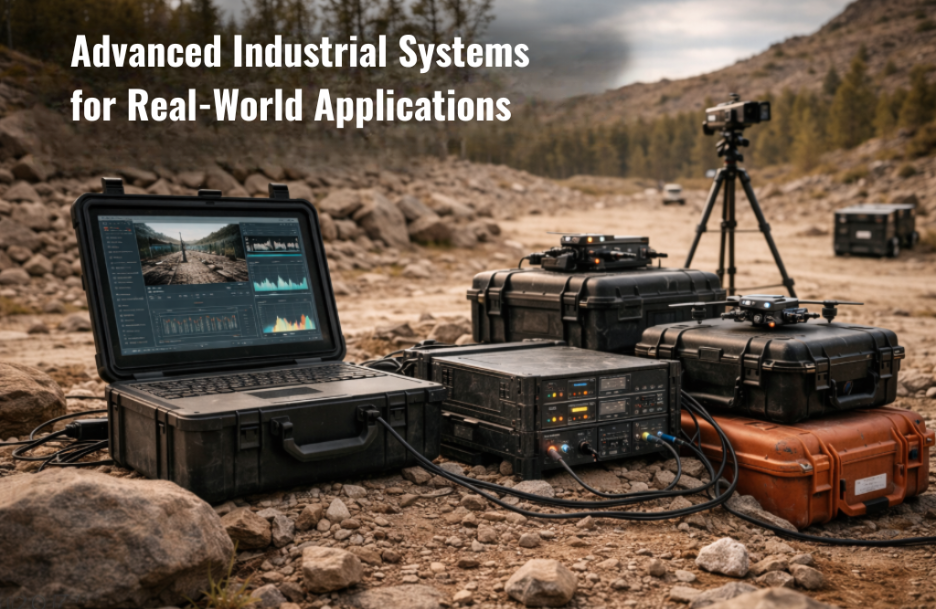
Companies need to understand industrial-grade technology solutions
Industrial environments need computing systems that exceed standard computing system capabilities. The operational environment requires solutions which can withstand extreme conditions and provide both portability and durability. The systems provide complete support for operational workflows which start from data collection and continue through advanced data analysis.
Digital forensics tools enable users to analyze data with exact accuracy through their built-in functionality. The tools extend their functions beyond investigation because they enable users to perform industrial analysis while verifying system data.
The systems provide operational flexibility because users can adapt them to match their particular business needs.
Industrial Operations Depend on Data Collection Activities
Modern industrial systems operate through a data core structure. Continuous data collection processes need to operate accurately so that organizations can track their operations while recognizing operational problems and making proper decisions.
The data acquisition system uses reliable methods to gather data from various sources which include sensors and monitoring devices and digital systems. The system enables organizations to sustain a continuous information stream which lets them perform real-time analysis.
Benefits of Efficient Data Collection
- Real-time monitoring of processes
- Improved operational accuracy
- Enhanced decision-making capabilities
- Seamless integration with analytical tools
The data acquisition system enables organizations to keep essential data accessible for both processing and analytical needs.
Expanding Capabilities with Digital Forensics Technology
Industrial solutions now use advanced analytical tools to enhance their operational performance while increasing system reliability. The modern digital forensics tool lets users analyze complex data sets find errors and verify data authenticity.
The capabilities function best in situations where maintaining data accuracy holds significant importance. Organizations can discover anomalies and validate system performance while maintaining their data accuracy standards through digital forensics tools.
The forensic-level analysis capability which integrates into industrial systems enhances both their operational efficiency and market value.
Portable and Off-Grid System Deployment
The advanced industrial solutions maintain their operational capacity through their ability to function in off-grid territories and distant regions. The traditional systems need constant infrastructure support which some areas may not provide.
The data acquisition system enables field users to gather and analyze data through its portable system design. The system enables users to make fast decisions because it reduces their need to use central facilities.
The systems require built-in power systems and connectivity features to ensure they can function without interruptions during tough operational situations.

Customization for Diverse Industrial Applications
The industrial applications require customized solutions because each operational sector operates through different procedures. The custom-built systems enable organizations to create solutions which meet their particular operational needs.
The organizations make digital forensics tools into operational assets through their combination with data acquisition systems. The systems enable users to set up data handling according to particular data types and existing systems, and specialized work procedures.
- Common Application Areas
- Environmental monitoring
- Research and development
- Industrial automation
- Field-based data collection
The industrial solutions keep their relevance because they can be used across different operational scenarios.
Enhancing Efficiency Through System Integration
Industrial operations need to maintain high efficiency levels. The combination of data collection and analysis functions through integrated systems creates work processes that achieve optimal operational efficiency.
The data acquisition system captures and transmits data while the digital forensics tool performs detailed data analysis and interpretation functions.
The system integration process cuts down manual work requirements while it decreases the possibility of errors. The system lets organizations concentrate on making strategic choices while they handle data management tasks.
The Future of Industrial Data Solutions
The need for advanced data systems will increase because industries will keep developing new technologies. The combination of IoT and edge computing requires companies to develop advanced systems which can manage rising data volumes.
Organizations need a dependable data acquisition system to secure high-quality data results while digital forensics tools allow them to conduct thorough data examination.
Organizations will use future industrial systems which support scalability and automation together with better integration methods to meet their technological advancement needs.
Conclusion
Modern industrial solutions need three essential elements which include robust construction, efficient operation, and superior analytical functions. The combination of a powerful digital forensics tool with a scalable data acquisition system enables modern systems to deliver complete data management and analysis solutions.
The technologies allow organizations to efficiently gather and process data while interpreting the results, which boosts their operational performance and helps them make better decisions. The integrated solutions will become essential for driving innovation and improving efficiency in industrial environments which keep advancing their operational complexity.
FAQ’s
- What are industrial-grade data systems used for?
The industrial-grade systems enable organizations to gather and process massive data quantities which they need for their operations in environments with tough operational requirements. The systems find their primary application in all field operations and research activities and monitoring tasks and automation requirements which demand both reliability and high performance.
- Why are portable systems important in industrial environments?
Portable systems enable professionals to conduct their work directly at the job site particularly in areas that lack proper access to power and remote locations. The system enables users to collect and analyze data without needing access to permanent infrastructure which results in faster operations and better productivity and reduced operational delays.
- How do industrial solutions improve operational efficiency?
The system efficiency improves through its design which enables users to collect data and process it and analyze it from a unified platform. The process decrease manual tasks and reduce error occurrence which leads to quicker decision-making because correct data can be used for decision-making.
- Can these systems be customized for specific industries?
The industrial solutions provide customizable options which let organizations create their operational frameworks to match their specific sector requirements. The system allows configuration for environmental monitoring and research activities and automation procedures.