
Modern investigations move quickly, and the quality of video evidence often decides how fast a case can progress. VideoActive is built for that pressure: it focuses on real-time forensic video processing, capture, and encoding, with tools designed for law enforcement, police, counter-terror, military, and forensic institutions. In practice, that means investigators can work from live sources or stored files, improve usability without sacrificing integrity, and keep evidence-ready workflows moving in real time. A major part of that value comes from lens correction and Camera Calibration, which helps ensure that footage is not just visible, but geometrically trustworth.
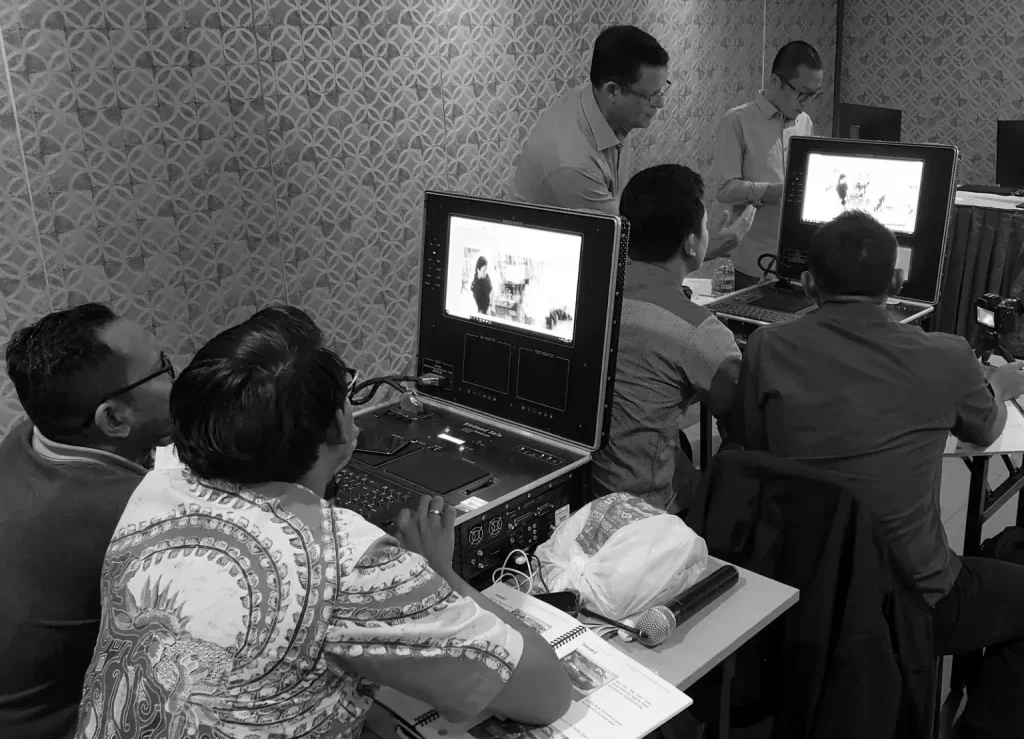
Why Forensic Video Needs More Than Simple Playback
Standard playback is not enough when the goal is intelligence, reconstruction, or courtroom use. VideoActive is positioned as a forensic acquisition and analysis platform, with real-time universal de-multiplexing, lossless capture, and video search capabilities that support operational review. For agencies working with surveillance, body-worn footage, traffic cameras, or mixed-source evidence, the challenge is not just finding the clip; it is making the footage usable, comparable, and defensible. That is where lens correction becomes essential, because distortion can otherwise affect how objects, angles, and distances are interpreted.
Built for Real-World Investigative Pipelines
One of the strongest aspects of VideoActive is its modular 64-bit architecture. The platform allows users to choose a predefined configuration or build a custom signal-processing chain, and it is designed to handle larger files such as 4K and 8K video. That matters in modern investigations, where high-resolution footage is common, and analysts need speed without losing detail. Camera Calibration fits naturally into this workflow because a calibrated camera produces a more reliable foundation for measurement, fusion, and scene interpretation. When investigators can trust the geometry of the image, their downstream analysis becomes stronger and more consistent.
Evidence Enhancement Without Compromising Accuracy
VideoActive includes functions such as video conversion, frame-accurate playback, multi-channel fusion, and reverse projection photogrammetry. These tools are especially valuable in law enforcement and military environments, where different cameras may capture the same event from different viewpoints and where spatial context is critical. lens correction helps before evidence is compared or measured, while the platform’s fusion tools can combine video with overhead maps or other reference imagery for more accurate geographic matching. In that sense, the software supports not only review, but reconstruction.
The Role of Calibration in Trustworthy Measurement
In forensic work, measurement is only as good as the underlying image geometry. VideoActive’s automatic Camera Calibration module assists the user with continuous feedback and is intended for use with AutoMeasure software, which reflects the broader goal of supporting scientific, repeatable analysis. That matters when a case involves height estimation, scene scale, vehicle movement, or position tracking. Even small geometric errors can distort conclusions, so a disciplined calibration process is not optional; it is foundational. This calibration layer is part of a chain of accuracy that supports analysis from capture through reporting.

Why this Matters for State Security Operations
State security teams and military units operate in environments where evidence must be processed quickly, clearly, and with minimal ambiguity. VideoActive is presented as a tool for exactly that kind of workload, with real-time capture, multi-source processing, and forensic analysis features intended for operational use. While Daetech also offers bespoke off-grid computing solutions for research, industrial, and academic sectors, the core value of this platform is its fit for law enforcement and military evidence workflows. In those settings, lens correction supports repeatability, and image clarity supports confidence in the findings.
A Practical Advantage for Modern Agencies
Agencies do not just need software that opens video files. They need software that helps them interpret scenes, preserve evidence quality, and move from capture to analysis without losing control of the process. VideoActive is structured around that requirement, combining modular processing, real-time tools, and Digital Forensics Tools in one environment. For teams handling sensitive operations, this can reduce friction in the workflow and improve the consistency of results. Used properly, the right processing stack supports cleaner visual output and stronger measurement discipline.
Conclusion
For law enforcement and military organizations, video is rarely just video. It is evidence, intelligence, and sometimes the first step toward operational action. VideoActive is designed to serve that reality with real-time Video Enhancement Software forensic processing, multi-channel fusion, lossless capture, and calibration-driven analysis. When agencies need to preserve detail, correct distortion, and maintain confidence in their findings, Camera Calibration is not a technical extra, it is a core requirement.
FAQ’s
- What is VideoActive used for law enforcement and military work?
VideoActive is used for real-time forensic video processing, capture, encoding and analysis. It makes it easier for investigators to work with live or stored footage and turn raw video into usable evidence.
- What is the importance of lens correction in forensic video analysis?
Lens correction corrects for distortion in footage, so objects, angles and distances look more accurate. It improves the capability to interpret, compare, and measure scenes.
- How does Camera Calibration improve the accuracy of video evidence?
Camera Calibration is important for reliable image geometry, which is important for tasks like height estimation, position tracking, and scene reconstruction. It allows for more reliable forensic analysis.
- Does VideoActive support high resolution videos such as 4K or 8K?
Yes, the platform is built to accommodate larger video files (4K, 8K) while maintaining fast processing and detailed review.
- The value of real-time forensic video processing in investigations.
Real-time processing allows agencies to review evidence faster, maintain workflow efficiency, and respond more quickly during active investigations or urgent operational situations.