
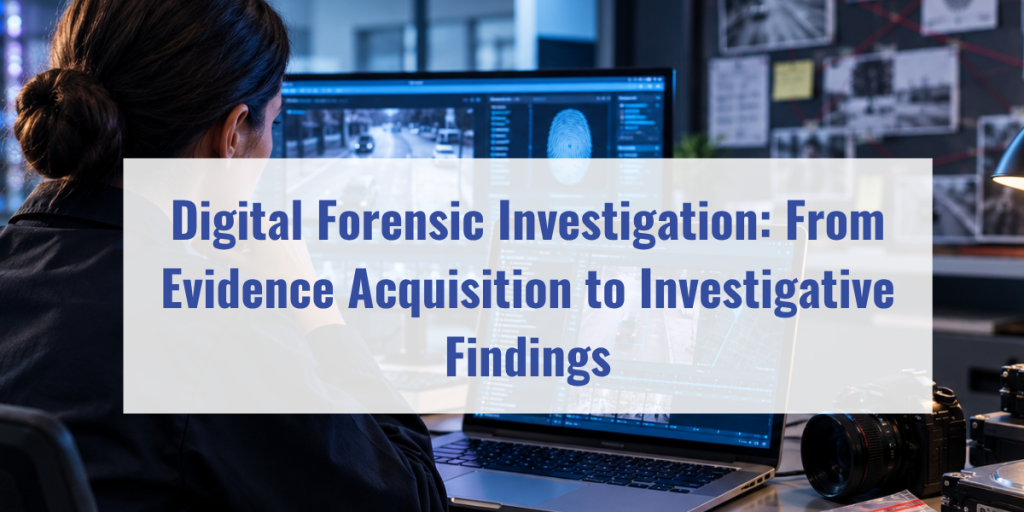
A digital forensic investigation rarely starts with a clear picture. It usually begins with a device, a drive, or a server that might hold the answer to a case, and an investigator who must figure out how to get that answer without damaging or losing it along the way. What separates a solid investigation from a shaky one isn’t luck. It’s a defined process, the right tools, and an investigator who understands both the technology and the legal weight that comes with handling digital evidence.
This guide walks through what a digital forensic investigation involves, from the moment evidence is identified to the point where findings are ready to support a case. It’s written for investigators, forensic lab managers, and law enforcement teams who want a clearer sense of how the pieces fit together, not just a list of buzzwords.
What Digital Forensics Actually Covers
Digital forensics is the process of identifying, preserving, analyzing, and presenting data from digital devices in a way that holds up to legal or organizational scrutiny. That data can come from computers, mobile phones, surveillance systems, cloud accounts, vehicles, or even smart home devices. The goal is always the same: reconstruct what happened, when it happened, and who was involved, using evidence that can withstand challenge in court or during an internal review.
This is different from general IT troubleshooting or data recovery, even though the underlying skills overlap. A forensic investigator must document every step, maintain a clear chain of custody, and use methods that don’t alter the original evidence. That’s why investigators lean on purpose-built investigation software rather than generic tools, since forensic platforms are designed to preserve evidence integrity while still giving analysts the depth they need to work through complex data sets.
Agencies and labs that want a fuller picture of how this fits into a broader Forensic Analysis workflow often start with a platform like DAE Tech Systems, which brings together several of the tools used across the acquisition and analysis stages of an investigation.
The Evidence Acquisition Stage
Acquisition is where an investigation either gets off to a strong start or runs into problems that follow it for the rest of the case. This is the stage where investigators collect data from the original source, whether that’s a hard drive, a phone, a security camera recording system, or a network log, and create a forensically sound copy to work from.
The core principle here is that the original evidence should never be the working copy. Investigators create a bit-for-bit image, verify it with a cryptographic hash, and then do all their analysis on that image rather than the source device. Write blockers, validated imaging tools, and documented procedures aren’t optional extras here; they’re what makes the resulting digital evidence usable later on, and what keeps the broader forensic technology stack a lab relies on defensible under scrutiny.
Acquisition gets more complicated with specialized data sources. Video from a multi-camera surveillance system often comes in proprietary formats that standard tools can’t read cleanly, and vehicle systems or embedded devices may require dedicated extraction methods entirely. This is where a data acquisition system built specifically for this kind of work becomes useful, since it’s designed to handle the intelligence gathering and format conversion that general-purpose tools tend to struggle with.
Processing and Analyzing the Evidence
Once evidence is acquired, real investigative work begins. Analysis is where raw data gets turned into something meaningful: timelines, connections between files and users, recovered deleted content, and patterns that wouldn’t be obvious just by browsing through a drive manually.
A lot of this work depends on the type of evidence involved. File system analysis might focus on metadata, timestamps, and deleted file recovery. Mobile forensics often centers on app data, messages, and location history. Video and image evidence require a different approach altogether, since raw footage frequently needs enhancement before it’s usable as evidence. Low light, motion blur, and compression artifacts are common problems with security footage, and enhancing that video without distorting it takes both the right video enhancing software and a careful, documented process.
Photogrammetry has also become a more common part of forensic analysis, particularly in cases involving scene reconstruction or measurements taken from photos and video. Instead of relying on physical measurements taken after the fact, investigators can extract accurate spatial data directly from image evidence using a forensics computer platform built for it. Tools like DARS give investigators a way to handle both photogrammetry and broader forensic computing tasks within a single, evidence-safe environment.
Building Reliable Investigative Findings
The final stage is turning analysis into findings that someone outside the forensic team can understand and trust. A good forensic report explains what was found, how it was found, and why the method used is reliable, without burying the reader in jargon. It should stand on its own, meaning someone with no technical background should be able to follow the logic from evidence to conclusion.
This also means being upfront about limitations. If a recovered file has gaps, or a timestamp could have multiple explanations, the report should say so rather than presenting a conclusion with more confidence than the evidence supports. Chain of custody documentation ties directly into this stage too — every person who touched the evidence, every transfer, and every storage location needs to be logged.
Building Investigative Capability, Not Just Buying Tools
Software alone doesn’t make an investigation reliable. Digital evidence formats change, new device types show up constantly, and legal standards around admissibility shift over time. This is part of why ongoing digital forensic training tends to separate strong forensic units from ones that struggle to keep pace.
Structured coursework covering both technical process and legal context gives investigators a way to build on existing skills rather than learning entirely through trial and error on live cases. A forensic investigator course that pairs video training software with acquisition and analysis techniques tends to produce more consistent, defensible work than ad hoc, on-the-job learning alone.
Common Challenges Investigators Run Into
Even with the right process and tools, investigations run into recurring obstacles. Encrypted devices can block access entirely, and while some encryption can be bypassed with legal authorization and the right tools, plenty of cases simply hit a wall. Data volume is another persistent issue — sorting through hundreds of gigabytes manually isn’t realistic, which is part of why automated indexing has become standard rather than optional.
Cross-platform inconsistency is a quieter but equally frustrating problem. Evidence pulled from a phone, a cloud account, and a laptop often comes in three different formats, and correlating timestamps across those sources takes real attention to detail.
Final Thoughts
Getting evidence acquisition right sets the foundation, thorough analysis builds the case, and well-documented findings are what actually make the work useful to whoever has to act on it. If your team is looking to strengthen any part of that process, DAE Tech Systems offers tools and training built specifically for this work. Explore their solutions to see where your current process can use support.
Frequently Asked Questions
How long does a typical investigation take?
It depends on the volume and type of evidence. A single device might take a few days; a case with multiple devices or large video archives can take weeks.Is this field only used in criminal cases?
No. It’s also used in civil litigation, corporate investigations, insurance claims, and internal HR matters.What qualifications does someone need to work in this field?
Most investigators combine an IT or computer science background with specialized training and certifications tied to specific tools or methodologies.Can deleted files always be recovered?
Not always. Recovery depends on time elapsed, overwriting, and storage type — solid-state drives make recovery significantly harder than traditional hard drives.