
It’s Monday morning. An examiner has footage from six cameras to review. Two colleagues need to see the same clips a supervisor wants a progress check from another site, and the lab one powerful workstation is tied up with a different case. Nothing about the evidence is unusual. The logistics are what hurt.
This is the situation pushing more teams toward a cloud platform for forensic analysis a hosted environment where evidence is stored, reviewed and processed remotely instead of on a single machine in a single room. The appeal is easy to see. The risk is easier to miss. Evidence isn’t a spreadsheet, and you have to prove it hasn’t changed, show who handled it, and keep everyone else away from it.
This playbook covers what hosted forensic software does well, where it falls short, and how to test a provider before you commit. It doesn’t claim that the cloud suits every lab. Some shouldn’t move at all, and that’s a legitimate answer.
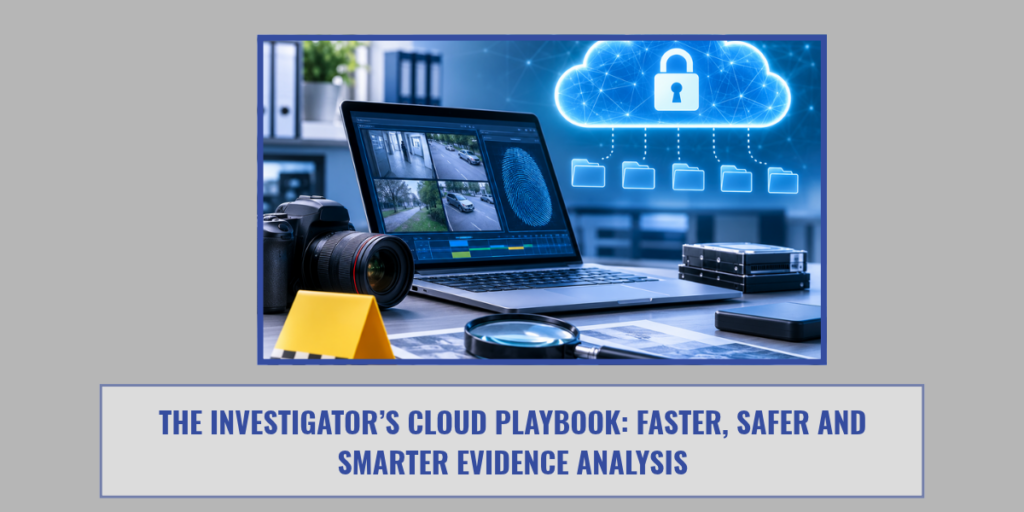
What a Cloud Platform for Forensic Analysis Actually Means
Vendors use the phrase loosely, so pin it down first. In practice, three models hide behind it:
- Storage only. You upload evidence, then download it whenever an analyst needs to work. Simple, but the analysis still happens elsewhere.
- A hosted workspace. Ingest, processing, annotation and export all happen inside a remote environment, reached through a browser or remote desktop.My Cognitech Cloud is an example of this approach, giving remote access to forensic investigation software.
- A hybrid setup. Large or highly sensitive files stay on local machines, while the cloud handles review, sharing and archiving.
Most real deployments end up hybrid. Which model you’re buying changes your security duties, your bandwidth needs, and even how you’d describe your process to a court. So ask the vendor which one they mean before you compare anything else.
Where Hosted Forensic Software Earns Its Place
Three problems tend to push teams toward the clouds.
- Capacity. Video, imagery, and mobile extractions are heavy. A big case can swamp local storage, while the computing power needed for it sits idle between cases. A hosted environment can flex up for the large job and back down afterward.
- Collaboration. Analysts, investigators, prosecutors, and outside experts often need the same material from different places. Posting drives and copying files between networks creates versions nobody can reconcile. One controlled copy with clear access rules can give you a tidier audit trail than a drawer of USB sticks, and it keepsdigital evidence in one governed place.
- Continuity. Hardware fails and buildings flood. A provider with genuine redundancy and tested backups lowers the odds that one incident wipes out a case. Treat that as a claim to verify, not a promise to accept.
The broaderDaetech solutions range shows how evidence of handling, processing and training fit together, which is a useful lens even if you never buy a cloud product.
Protecting Evidence Integrity and Chain of Custody
This is where forensic use parts ways with ordinary cloud use. Your work will be challenging. You need to show that the file you analyzed is the file that was collected, and that every change to your working copy was recorded.
A credible platform should offer:
- Hashing at ingest. Cryptographic hashes created when files arrive, with the ability to re-check them later.
- Protected originals. The master file was kept apart from working copies and never overwritten.
- Complete audit logs. Who viewed, exported, processed or deleted what, and when, with entries nobody can quietly edit. Ask how the logs themselves are protected. A vague answer tells you something.
- Documented processing. Every enhancement step recorded with its settings, so a second examiner could repeat it and get the same result.
The last point matters most for authenticity work. If you useimage analysis software to assess whether a file has been altered, confirm that results are reproducible in the hosted environment and on a local workstation. The same goes for anydigital image processing step you rely on in a report.
Security, Data Residency and Access Control
Evidence is sensitive and often regulated on top of that. Before you shortlist anyone, get plain answers to these questions:
- Where is data stored and processed? Some agencies must keep evidence within a country or region.
- Who at the provider can reach your files? And is every access logged?
- Is data encrypted in transit and at rest, and who holds the keys? Customer-managed keys give more control but lose them, and you’ve lost the evidence.
- Are roles properly separated? An analyst, a reviewing officer, and an outside expert shouldn’t all see the same things.
- Is multi-factor sign-in standard? It should be the default, not an add-on.
Rules differ by country, agency, and case type, so don’t let a marketing page settle the matter. Ask for current certifications and audit reports, then have your legal and information security teams compare them against your obligations.
What Runs Well Remotely and What Doesn’t
Not every task suits a remote setup.
- Usually smooth: reviewing footage, tagging clips, writing notes and reports, and sharing exhibits with the people who need them.
- Often harder: heavy interactive work, especially on a thin connection. Scrubbing through high-resolution video over slow bandwidth is miserable, and uploading terabytes takes longer than most budgets assume. Work out realistic upload times early. That one number often decides whether going cloud-first is practical at all.
Specialist processing adds its own demands. If your casework involves avideo enhancer or avideo resolution enhancer for poor-quality recordings, test it on real material, not tidy demo clips. The same applies to measurement work:photogrammetry software can consume a lot of memory and storage on large image sets, so make sure the hosted environment copes with your normal case size.
It also helps to think about what feeds the workflow. Capture often starts on-site with adata acquisition system, and evidence management afterward can sit in a system such asDARS. Decide which steps to stay local and which move. Some may stay on-site for good, and there’s nothing wrong with that.
When the Cloud Isn’t the Right Call
A provider who says it suits everyone is selling. Air-gapped labs, agencies whose data-residency rules the market can’t meet, and teams on weak connections may find a hosted setup creates more work than it saves. If most of your casework is small files handled by one or two analysts, local storage with tested backups and a documented process may serve you better.
Here’s a fair test. If you can’t explain in plain language where your evidence lives, who can reach it, and how you’d prove it’s unchanged, pause. Fix that first, then revisit the cloud.
Costs and Contract Terms to Check
Cloud pricing looks simple until the first invoice. Storage is usually billed by volume, while processing, bandwidth and user licenses may be charged separately. Egress fees, the charge for pulling data back out, are easy to overlook and painful when you need a large export.
The contract matters as much as the price:
- What happens to your data if you cancel, how fast do you get it back, and in what format?
- How is data deleted afterward, and can you obtain confirmation?
- Can retention be set for the years of evidence may need to be kept, and is there any automatic deletion that could cause damage if misconfigured?
- What are the uptime and support commitments, and how are outages or breaches reported to you?
Plan your exit before you enter. A provider that makes leaving difficult is a risk when you’re answerable for evidence long after a project closes.
How to Test a Provider: A Four-Step Pilot
Skip the feature-list comparison. Run a small pilot instead.
- Use non-sensitive or training material that resembles your real casework, including awkward proprietary formats.
- Put two analysts on the same files and check whether the logs capture what each person did.
- Time the uploads and reviews on your actual network, not the vendor’s.
- Export a full package with hashes and processing records, then ask whether another examiner could follow and repeat the work.
By the end, you should have written answers to four questions: where the data lives, how logs and originals are protected, what real bandwidth the workflow needs, and what a full export costs.
Prepare the People, Not Just the Platform
A good platform won’t rescue a team that isn’t sure how to document its process. Before rolling out, make sure analysts are comfortable with the evidence-handling steps that remote work puts under a brighter light. Structureddigital forensic training or aforensic investigator course can help here, particularly for newer staff. If you’re comparing options more broadly, Daetech’sinvestigation software overview is a reasonable place to see how the pieces connect.
Where to Start
A cloud platform for forensic analysis can be a sound decision, especially when capacity, collaboration, or resilience is what’s holding your team back. Base the choice on evidence of integrity, security, honest workflow testing and a clear way out, not on convenience.
Your next step is small: write down the four questions above, run a pilot with realistic material, and read the contract line by line. You may have to explain your reasoning later, so keep the notes.
Frequently Asked Questions
- Is evidence processed in hosted forensic software admissible in court?
That depends on your jurisdiction and on whether you can show integrity, a documented chain of custody, and a repeatable process. The cloud neither helps nor hurts itself. Weak documentation does. Confirm local requirements with your legal team. - Can we keep some evidence offline and use the cloud for the rest?
Yes, and many teams do. A hybrid approach keeps the most sensitive material on local systems while hosted tools handle review, collaboration and archiving. - What’s the difference between cloud storage and a cloud platform for forensic analysis? Storage holds files. A forensic platform also supports processing, access control, logging, and exports inside the same governed environment.
- How long does it take to upload a large case?
It depends entirely on your connection and file sizes, so test it. Measure real upload speeds during a pilot rather than trusting an estimate. - What should we ask a provider first?
Data location, access controls, and the export process. The answers quickly show whether a vendor understands evidence of workflows or has repackaged generic storage.