
Investigators in digital forensics now rely on visual media gathered from many different types of recording equipment. The body-worn devices and vehicle cameras together with smartphones and surveillance systems create a continuous stream of video which later serves as vital proof. Investigators face challenges because video evidence from various sources shows problems like poor visibility and motion blur plus audio issues caused by loud activities and viewing from bad angles. Analysts use forensic software which provides advanced video analysis tools together with video resolution enhancer functions to evaluate video content under these conditions.
The evidence preservation process allows investigators to conduct recording analysis while keeping all original evidence intact. The enhancement process enables experts to improve visual parts of the image while keeping all original data intact. Analysts can now study new information about items and movements and environmental conditions which they couldn’t identify before because the details became clearer.
The Role of Video Analysis in Digital Investigations
Investigators use video footage analysis to solve contemporary cases. Investigators must analyze video content frame by frame to find all relevant details about people and objects and vehicles, and movement patterns. Advanced video analysis tools help professionals examine complex recordings while maintaining accurate and repeatable forensic processes.
Digital video evidence can originate from different devices which include CCTV systems and smartphones and security cameras. Each recording may use different formats, compression methods, or frame rates. Investigators need specialized forensic platforms to safely convert and process their files which will enable them to conduct uniform video analysis across all evidence sources.
The ability to standardize and examine video evidence becomes necessary during major investigations which need multiple footage evaluations from various sites.
Enhancing Footage with Video Resolution Enhancer Technology
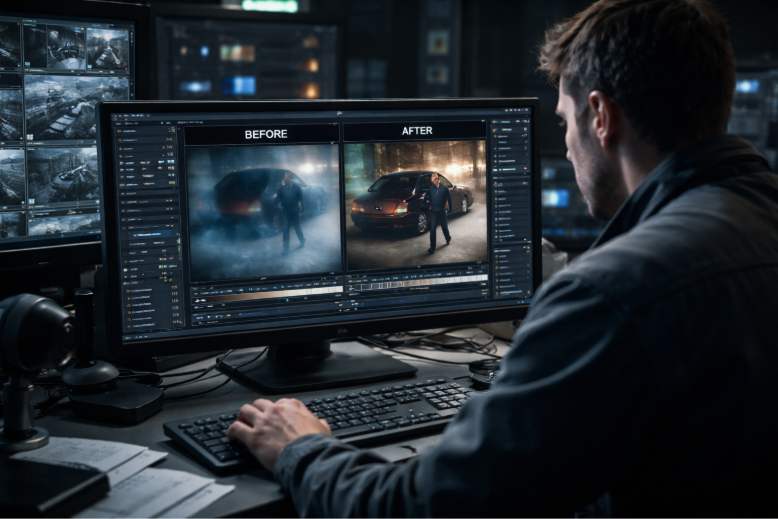
The majority of surveillance video material experiences problems because low resolution and excessive compression limit its viewing capabilities. Investigators need to apply recognized enhancement methods which help them expose crucial evidence during investigations. Advanced algorithms in a video resolution enhancer create better image quality through their ability to improve clarity without changing any actual evidence.
Forensic enhancement tools enable frame visibility improvements through distortion correction and noise reduction techniques which help maintain the original frame integrity. The technology enables analysts to detect objects and activities which remain hidden in the original recording. The correct usage of a video resolution enhancer allows investigators to display all details about vehicle attributes and movement patterns and environmental context within a given scene.
Forensic enhancement tools operate according to strict scientific protocols which guarantee that all enhancements made during the process become fully understandable and repeatable.
Advanced Processing Techniques for Video Evidence
Digital investigations require a comprehensive set of analytical tools which professional forensic platforms provide through their dedicated forensic analysis suite. The systems enable users to execute multiple functions including frame averaging and perspective correction and noise reduction. Investigators can conduct advanced video analysis through these methods to gain better insights into the events shown in the footage.
The method enables users to combine different video frames which results in better image quality through dynamic noise reduction and improved visibility of stationary objects. Perspective correction techniques enable users to fix the visual flaws that occur because of camera position and lens design. The combination of video resolution enhancement functions with these methods produces evidence which has better visibility and easier understanding.
The advanced processing techniques prove highly effective because they enable users to handle difficult video material from surveillance systems which operate under strict environmental limits.
Supporting Accurate Investigative Workflows
Forensic video examination requires structured workflows that ensure evidence remains reliable and admissible. The specialized systems offer investigators complete video file handling capabilities through their tools which enable video file capture and conversion and processing while preserving original data. The systems enable users to analyze videos while managing evidence through their complete documentation system which guarantees tracking of all process stages.
The controlled forensic environment allows analysts to test video resolution enhancers for their ability to produce results which can be duplicated through the controlled forensic environment. The investigative process requires transparency because it establishes the credibility of scientific findings

The Importance of Scientific Forensic Tools
Modern forensic video tools are based on scientific research and validated algorithms. The majority of forensic platforms use advanced filtering methods together with computational techniques which enable them to process complex video data analysis. The technologies enable investigators to conduct video analysis on recordings which would otherwise be impossible to analyze.
Modern video resolution enhancer algorithms use advanced techniques to determine the specific blur patterns of the image while they restore sharpness in situations where traditional filters fail. The technology gives investigators the power to retrieve hidden visual information from degraded footage that would have been lost otherwise.
Strengthening Investigations with Better Video Evidence
The growing importance of digital recordings requires the development of skills needed to analyze and interpret video evidence. Investigators need to use special technologies which enable them to study video material without damaging the evidence.
Forensic experts can change challenging footage into useful investigation material through structured video analysis processes and advanced video resolution enhancer technology. The analytical tools enable researchers to uncover concealed information while enhancing visual details and providing scientifically proven methods which help support investigative findings.
Conclusion
The need to handle video evidence correctly has increased because digital recordings have become essential to investigation work. Security cameras and other recording devices capture useful information through their footage, but bad recording situations create challenges for viewers to see essential details. The investigation team needs equipment which uses special tools to perform structured video analysis with advanced video resolution enhancement functions.
Investigators use detailed enhancement methods together with analytical techniques to perform visual evidence assessments while maintaining the original evidence’s complete state. The processes reveal significant hidden information which helps investigators make accurate assessments to support their work. Digital evidence professionals depend on trustworthy forensic video analysis tools which will continue to be necessary as technology develops.
FAQs
- Why is visual footage crucial for conducting investigations?
The visual recordings show the actual events which took place and they provide investigators with essential information about the sequence of events and the places people traveled and their social interactions. Investigators can use this evidence to recreate the events which occurred and to confirm their investigation results.
- What challenges do investigators encounter while they examine recorded video material?
Investigators must handle recordings which suffer from low light conditions and motion blur and compression artifacts and incorrect camera angles. The problems present obstacles which prevent viewers from seeing essential elements in the recorded material.
- How do investigators handle low-quality recordings during an investigation?
Analysts use specialized tools to investigate and analyze recordings through forensic examination. The tools enable researchers to make visual details clear while maintaining the integrity of the original evidence.
- Why is it important to preserve the original recording during analysis?
The original file maintenance guarantees evidence preservation which maintains its authenticity and trustworthiness. The source recording preservation is necessary to maintain evidence credibility for investigative assessments and legal processes.
- What types of devices commonly provide footage used in investigations?
Recordings originate from various sources which include surveillance cameras and mobile phones and vehicle dashcams and body-worn cameras and other digital recording systems that capture real-world events.