
Blog Summary: A look at what forensic technology changes on the ground for investigators, for evidence of handling, and for how cases hold up once they reach a courtroom. Written for law enforcement teams and forensic labs leads to deciding whether their current setup is still good enough.
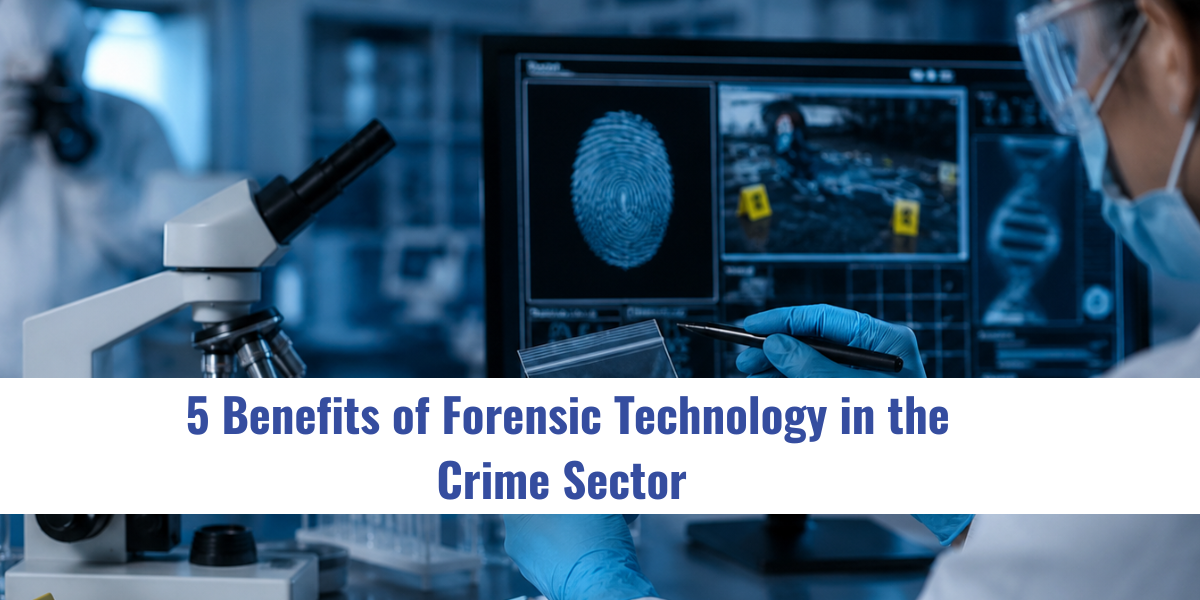
Evidence doesn’t wait around. A video file left uncatalogued for a few days, a memory card handled without a proper log small gaps like that can undo weeks of investigative work. Anyone who’s worked in a case knows this isn’t hypothetical. It happens.
That’s the real argument for forensic technology. Not that it’s impressive, or modern, or whatever word gets used in a vendor’s pitch, but that it closes the specific gaps where cases actually break down. Below are five places that show up in practice.
1. Evidence gets captured properly the first time
Here’s a problem most departments don’t talk about enough: a lot of digital evidence is technically collected but poorly documented. The file exists, but nobody can say with certainty when it was pulled, from where, or by whom. That’s a weak spot defense attorneys know to look for.
A dedicated acquisition system fixes this at the source. DARS, for example, captures timestamps, GPS data, and file metadata automatically the moment evidence is collected — no separate spreadsheet, no relying on someone’s memory three weeks later.
It sounds like a small thing until you’re the one trying to explain a missing timestamp on the stand.
-
The chain of custodyholdsup
Ask any prosecutor what kills a strong case, and “we can’t prove nobody touched it” comes up more than you’d think. Physical evidence has decades of established handling protocols behind it. Digital evidence is a newer territory, and a lot of departments are still catching up.
Good investigation software builds the audit trail automatically for those who accessed a file, when, and what they did with it. No manual logs to forget, no gaps for opposing counsel to poke at.
If you’re trying to see where these protections fit into a broader setup, DAE Tech Systems’ solutions page lays out what a fuller forensic workflow looks like end to end.
3. Investigators stop losing time to scattered tools
There’s a specific kind of frustration that comes from working in a case across four different programs — one for photos, one for video, one for notes, one for whatever intelligence-gathering platform got adopted two years ago and never fully integrated. Every switch between them is a few minutes lost. Multiply across a caseload and it adds up to real hours.
MIDAS was built to collapse that into one place — enhancing footage, pulling intelligence, and organizing evidence without the constant tab-switching. For a unit handling a heavy caseload, that’s not a minor convenience. It’s the difference between closing a case this month or next.
4. Fewer mistakes, because people know the tools
Here’s something worth saying plainly: expensive software in untrained hands doesn’t help anyone. If an investigator doesn’t fully understand how a system logs or handles evidence, the tool can end up creating problems instead of solving them.
This is exactly why training matters as much as the hardware itself, maybe more. Solid video training software and a proper forensic investigator course don’t just show someone which button does what. They explain why the process matters, so investigators aren’t just following steps blindly.
Departments looking to shore up gaps on the systems they already own or get new hires up to speed faster can look at what’s offered through DAE Tech Systems’ training programs.
5. Cases hold up better once they reach court
Put the first four together and you get evidence that’s harder to challenge: properly captured, properly logged, handled by people who know what they’re doing. That doesn’t guarantee a conviction. Nothing does. But it does mean a case gets decided on its facts instead of thrown out over a procedural technicality that had nothing to do with guilt or innocence.
That’s the quiet payoff most departments don’t fully appreciate until they’ve lost a case they shouldn’t have over something that had nothing to do with the actual evidence.
Where this goes wrong
Most agencies don’t fail at forensic technology because they pick bad tools. They fail because they treat acquisition, storage, and training as three separate purchases instead of one connected system. The weakest link usually training, if we’re honest — ends up undermining everything built around it.
If your team is still stitching together separate programs for capture, analysis, and training, that’s worth a second look. Not because the current setup is broken, necessarily, but because a connected one tends to catch problems before they cost a case.
FAQ
- What is forensic technology used for criminal investigations?
Mainly collecting, analyzing, and preserving digital evidence of video, images, and metadata in a way that keeps it legally defensible. - How is digital evidence different from physical evidence?
It’s easier to alter or lose, and there’s less established handling protocol for it compared to, say, a fingerprint or a weapon. That’s part of why dedicated systems matter more here. - If the software handles documentation, why does training still matter?
Because software can’t fix a broken process. If an investigator mishandles evidence before or after the software touches it, no automated log fixes that after the fact. - Is this worth it for smaller departments with limited budgets?
Often, yes, sometimes more so. Smaller teams feel the cost of scattered tools and manual logging even harder, since there’s less staff to absorb the extra time.