
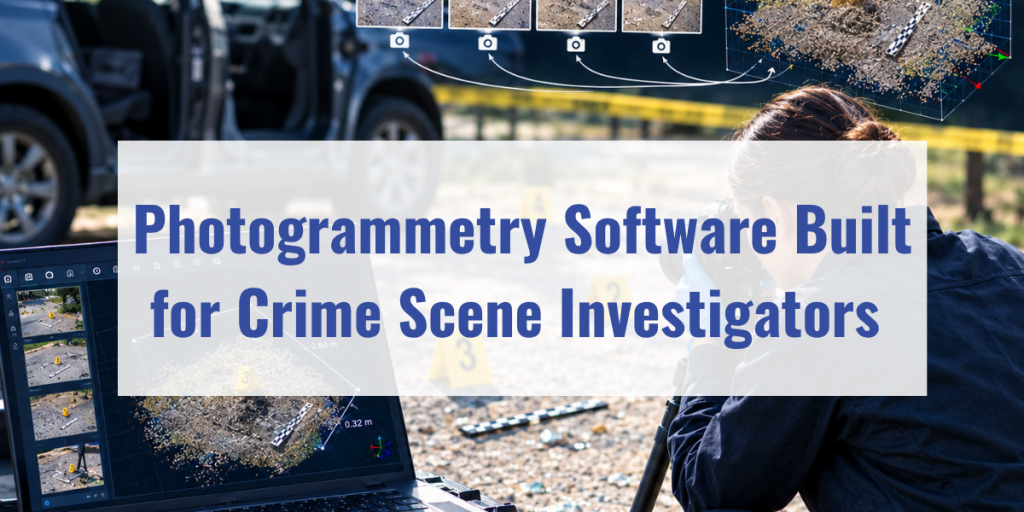
A crime scene doesn’t wait. Evidence gets moved, weather changes, a room gets released back to its owner and once that happens, there’s no second chance to measure it. This is the exact problem photogrammetry software was built to solve: turning a set of overlapping photographs into precise, measurable 3D data before the scene disappears.
This kind of measurement work sits inside a much larger discipline digital forensics as a whole depends on capturing evidence accurately before it’s lost, and photogrammetry is one of the more specialized corners of that field. If you’re researching photogrammetry software specifically for digital forensic investigation work, you’ve likely already run into the two things that separate a usable tool from a frustrating one: calibration accuracy and how well the software fits into an actual investigative workflow. This article breaks down both.
What Photogrammetry Software Actually Does at a Crime Scene
Photogrammetry software reconstructs a 3D model from a series of 2D photographs taken from different angles. Instead of relying only on tape measurements or laser scanning equipment, an investigator can photograph a scene a vehicle collision, a room, a shoe impression, a bloodstain pattern and let the software calculate real-world distances, angles, and spatial relationships from those images.
For crime scene work specifically, this matters because:
- It preserves the scene digitally, so measurements can be revisited later, even after the physical scene is gone.
- It reduces contact with evidence, since fewer people need to physically enter and measure the space.
- It supports courtroom presentation, giving attorneys and juries a 3D reconstruction instead of a flat photo or a hand-drawn diagram.
- It documents scale objectively, which matters when measurements are challenged during cross-examination.
The output is only as reliable as the Camera Calibration behind it, though — which is where multi-view calibration comes in.
Why Multi View Calibration Is the Real Differentiator
A lot of photogrammetry tools can stitch photos into something that looks like a 3D model. Far fewer can guarantee that the measurements inside that model are forensically defensible.
Multi view calibration is what closes that gap. Rather than calculating distance from a single reference point or a single camera angle, multi view calibration cross-references multiple camera positions and known reference points across the entire photo set. This produces a model where measurements are checked and corrected against each other, not just estimated from one vantage point.
For a crime scene investigator, this has three practical effects:
- Consistent accuracy across the full scene, not just the center of the frame.
Single-angle measurement tools tend to lose accuracy toward the edges of an image or in areas with fewer reference points. Multi view calibration corrects this by triangulating from several angles at once. - Fewer errors from awkward photo angles.
Real crime scenes aren’t photographed in ideal studio conditions. Investigators shoot around furniture, vehicles, doorways, and obstructions. A calibration method built on multiple viewpoints tolerates that variability far better than single-view methods. - Measurements that hold up under scrutiny.
When a defense attorney questions how a distance was calculated, “the software cross-checked it against multiple photo angles and reference points” is a stronger answer than “the software estimated it from one image.”
What to Look for When Evaluating Photogrammetry Software
If you’re a crime scene investigator or forensic unit lead comparing tools, these are the questions worth asking before committing to one:
- Does it support standard photography equipment?
The best tools work with the cameras your team already owns rather than requiring specialized rigs. - How does it handle scale and reference points?
Ask specifically how the software establishes real-world scale — through markers, known object dimensions, or automated calibration — and how that process holds up in less-than-ideal lighting or cramped spaces. - Can output be exported in formats courts and other agencies will accept?
A 3D model that can’t be shared, printed, or reviewed outside the software isn’t useful in practice. - What’s the learning curve for a team that isn’t full-time technical staff?
Forensic photogrammetry tools should be usable by investigators, not just specialists with a computer science background. - Is there training available?
Software adoption in forensic units tends to succeed or fail based on training, not features. See DAE Tech Systems’ digital forensic training programs for what a structured onboarding path looks like.
Where Photogrammetry Fits Into a Broader Forensic Workflow
Photogrammetry software rarely works in isolation. In most digital forensic units, it sits alongside:
- Data acquisition tools that pull in video and image evidence from multiple sources, similar to what MIDAS handles for data acquisition.
- Case-level investigation platforms that organize evidence, timelines, and reports — the kind of structure covered under digital forensic investigation solutions.
- Dedicated reconstruction systems, such as DARS, which pairs forensic computing with photogrammetry-specific reconstruction work.
Understanding how a photogrammetry tool connects to the rest of your evidence pipeline matters more than judging it in isolation. A tool that produces great 3D models but doesn’t integrate with your case files or reporting process creates extra work rather than saving time.
A Practical Example of the Difference Calibration Makes
Picture a hit-and-run scene: skid marks across two lanes, a damaged guardrail, and debris scattered across an intersection. A single-angle measurement approach might capture the skid marks accurately but lose precision on the debris field near the edge of the photographed area, since it’s farther from the primary reference point.
With multi view calibration for forensic technology, the same scene is captured from several positions around the intersection. The software cross-references all of them, so the debris field, the skid marks, and the guardrail damage are measured with consistent accuracy — not just the section closest to where the first photo was taken.
That consistency is often the difference between a reconstruction that supports a case and one that invites doubt.
Conclusion
Photogrammetry software has moved from a specialized add-on to a standard part of serious crime scene documentation. But not all photogrammetry tools are built with forensic accuracy and cloud services provider in mind and the calibration method behind the software is what determines whether the measurements will hold up outside the lab. Multi view calibration, specifically, is what allows a crime scene investigator to trust a 3D reconstruction enough to put it in front of a judge, jury, or opposing counsel.
If your unit is evaluating photogrammetry tools, start with how the software calibrates measurements — everything else about usability and integration matters, but accuracy is non-negotiable.
FAQ
- What is photogrammetry software used for in forensic investigations?
It converts overlapping photographs of a crime scene into a measurable 3D model, allowing investigators to document distances, angles, and spatial relationships without relying solely on manual measurement. - What is multi view calibration in photogrammetry?
It’s a calibration method that cross-references multiple camera angles and reference points across a photo set, rather than calculating measurements from a single viewpoint. This improves accuracy across the entire scene, including areas farther from the primary camera position. - Do crime scene investigators need special cameras for photogrammetry?
Not necessarily. Many forensic photogrammetry tools are designed to work with standard DSLR or mirrorless cameras that departments already use, though photo quality and coverage angles still affect the final model’s accuracy. - Can photogrammetry measurements be used as courtroom evidence?
Yes, when the software’s calibration method is well-documented and defensible. Multi view calibration in particular gives investigators a stronger basis for measurements under cross-examination, since the data is cross-checked from several angles rather than estimated from one. - How does photogrammetry software fit with other forensic tools?
It typically works alongside data acquisition systems, case management platforms, and forensic reconstruction tools, feeding 3D measurement data into the broader evidence workflow rather than functioning as a standalone product.