
Digital evidence rarely arrives clean. It’s a shaky phone video, a grainy security camera clip, a photo someone’s not sure is real. Before any of that can hold up in an investigation let alone a courtroom, someone must verify it, enhance it, and prove it hasn’t been tampered with.
That’s the whole point of digital evidence analysis software. It takes raw footage and images and turns them into something an investigator can actually stand behind.
Why Forensic Video Analysis Comes First
Most digital evidence starts as video, and most videos start looking worse than it needs to.
Bad lighting, low resolution, motion blur footage from a gas station camera or a doorbell system almost never looks courtroom-ready straight out of the box. Forensic video analysis is the step that clears that up, pulling detail out of footage that would otherwise get dismissed as “too unclear to use.”
Without that step, a lot of usable evidence just never gets used at all.
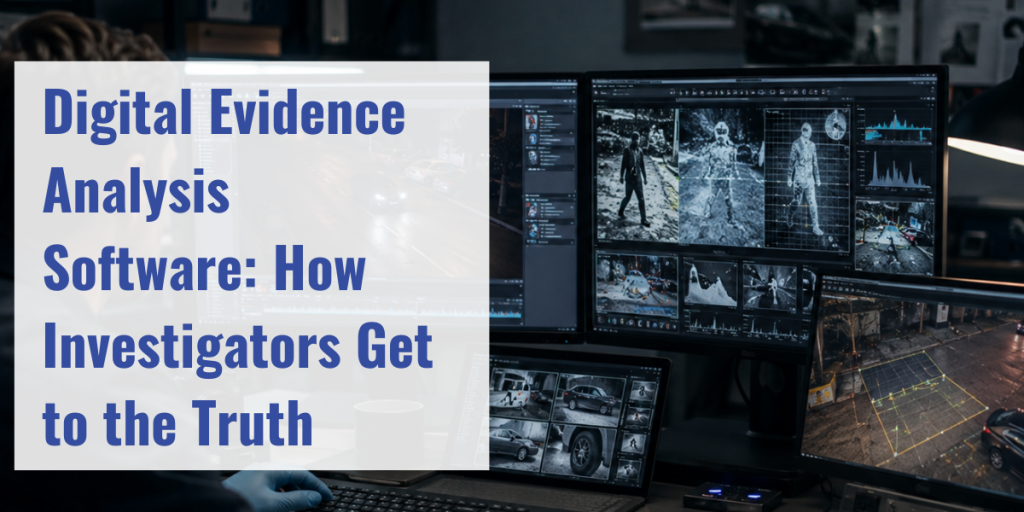
Software Built for the Job: Cognitech Video Investigator
Generic editing tools weren’t built for forensic work, and it shows the moment you try to use them for anything evidentiary.
That’s the gap tools like Cognitech Video Investigator fill. It’s built specifically to enhance, stabilize, and clarify video evidence while keeping the chain of custody intact — something a consumer video editor simply isn’t designed to protect.
For investigators, that difference is what separates footage that’s admissible from footage that’s just interesting to look at.
- Verifying Images Before They Go Anywhere Near a Case File
Photos get manipulated more easily than most people realize, and it doesn’t always take much time to do it. Image authentication software checks whether a photo has been altered, cropped, resaved, or edited in ways that change what it actually shows. That verification step matters just as much as the image itself a photo nobody can vouch for isn’t much use as evidence.
It’s the kind of check that either confirms a piece of evidence is solid or flags a problem before it becomes one later.
DARS: Keeping Evidence Review Organized
Once footage and images are cleared, someone still has to manage all of it and in a real case, that’s rarely a small pile. A DARS forensic solution gives investigator a structured way to acquire, organize, and review digital evidence without losing track of where each file came from. That kind of organization sounds unglamorous, but it’s often what keeps a case from falling apart on a technicality.
Solid digital evidence review isn’t just about the analysis it’s about being able to show your work later.
MIDAS and the Question of Measurement
Sometimes the evidence isn’t about what’s shown; it’s about how big, how far, or how fast something was. That’s where MIDAS forensic software comes in. It’s built for measurement analysis, letting investigators pull accurate distances, heights, and speeds directly out of video or image evidence instead of guessing or estimating.
Those measurements are often what turn a vague clip into something with real evidentiary weight.
AutoMeasure: Speeding Up the Repetitive Work
Manual measurement gets old fast, especially in cases with hours of footage to go through.
Auto measure forensic software automates a lot of that repetitive video measurement analysis, cutting down the hour investigators spend doing calculations by hand. It doesn’t replace expert judgment, but it does free up time for the parts of a case that actually need a human eye.
For teams working under deadline pressure, time savings adds quickly.
Bringing It Together: A Complete Forensic Workflow
None of these tool’s work in isolation that’s really the point.
A proper digital forensic investigation workflow moves through video enhancement, image verification, structured evidence review, and measurement analysis as one connected process, not a handful of separate tools bolted together. That consistency is what makes a case defensible from the first file acquired to the final report.
At the end of the day, digital forensics comes down to trust that the footage is real, that the measurements are accurate, and that nothing got lost along the way. The right software doesn’t just make analysis faster. It gives investigators, attorneys, and courts a reason to believe the evidence in front of them tells the truth.
FAQ
1. What is digital evidence analysis software?
Digital evidence analysis software helps investigators enhance, verify, organize, and measure digital evidence such as videos and images.
2. Why is forensic video analysis important?
Forensic video analysis can improve unclear footage by addressing issues such as poor lighting, motion blur, and low resolution, helping investigators identify useful details.
3. How does image authentication software help investigations?
Image authentication software checks digital images for signs of editing or manipulation, helping investigators determine whether an image can be trusted as evidence.
4. What tools are used in digital forensic investigations?
Investigators may use tools such as Cognitech Video Investigator, DARS, MIDAS, and AutoMeasure for video enhancement, evidence management, measurement, and analysis.